

 Sign In
 0
0Main content starts here
How to Care for Down Wear
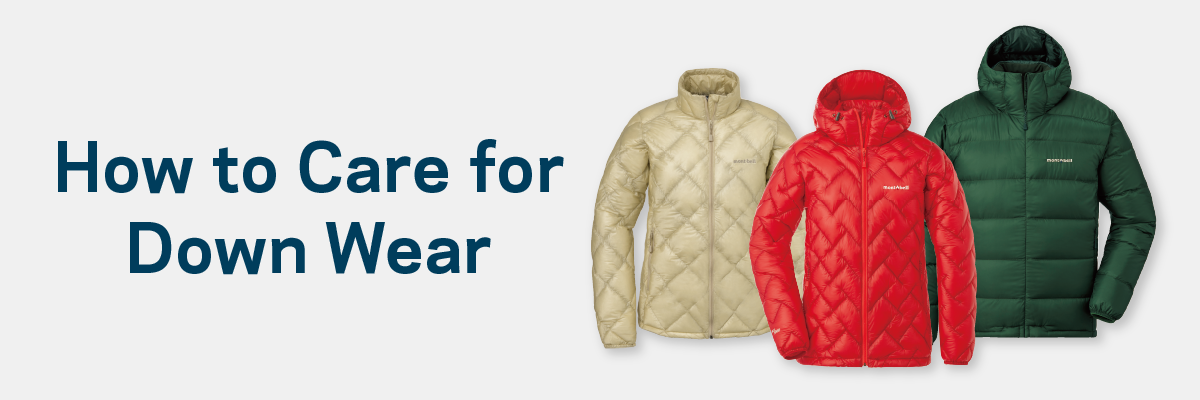
Contaminants, such as sweat or the oil our bodies naturally produce, adhere to down, causing the feathers to clump together. This reduces the down's ability to loft (trap air) and thus decreases the garment's insulating properties. Regular maintenance and washing are essential to prevent loss of performance. We recommend washing your down garment if you find it dirty or you notice a reduction in the garment's ability to keep you warm, compared to when you first got it (i.e., the down's ability to fully loft has been affected). You may choose to have it cleaned professionally; however, it is also possible to wash Montbell down garments at home!
Notice
Montbell's maintenance products cannot be shipped to certain countries. In such cases, please use products from other manufacturers. Montbell recommends cleaning products made by Nikwax, Grangers, and Revivex.
Washing and drying procedures
Laundry detergents for insulated products
We recommend using a laundry detergent specifically formulated for washing down garments. "O.D. Maintenance Down Cleaner" is a specially formulated detergent that doesn't damage down or fabrics. It thoroughly removes contaminants such as sweat and oil that have worked their way into the down. This allows the down to loft again and restores its insulative properties.
Laundry method using down specific detergent
1. Preparation
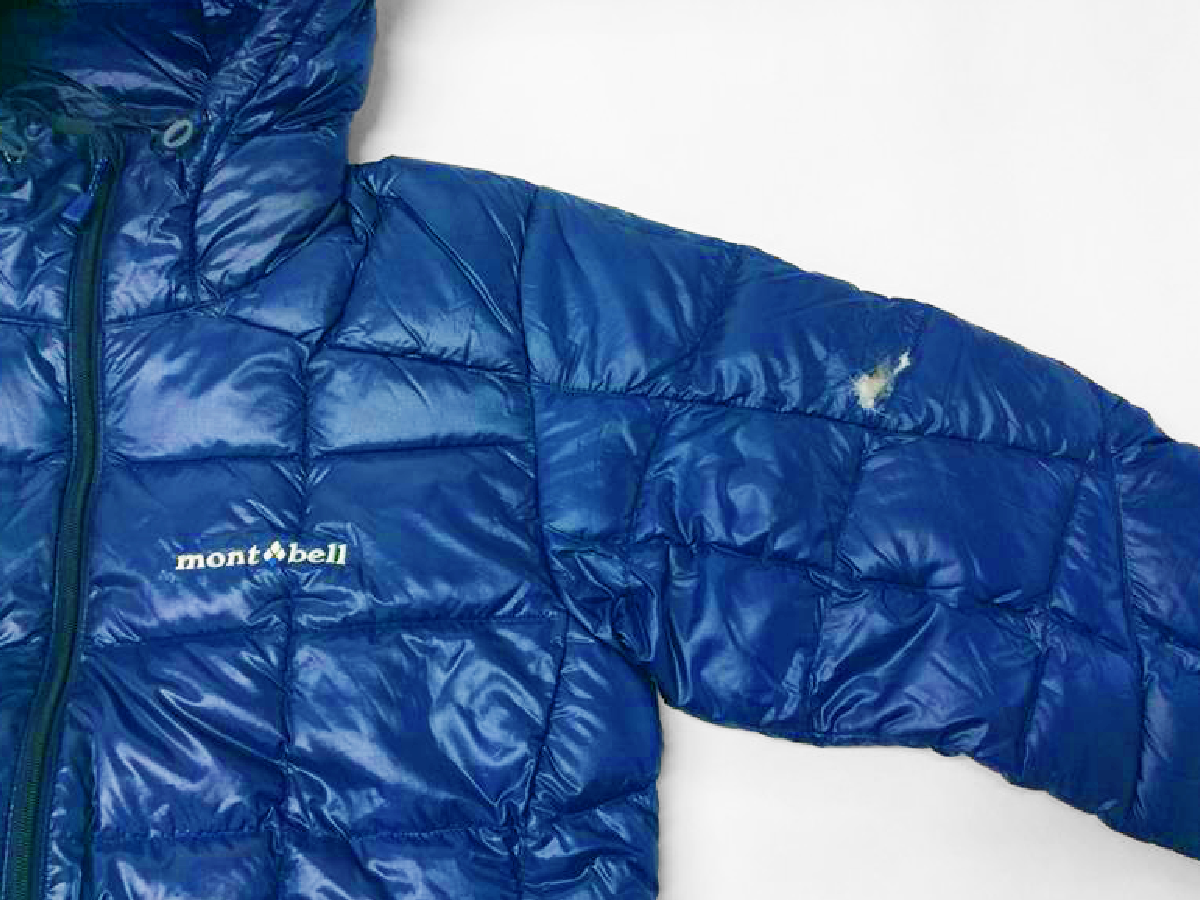
First, check the garment for any tears or damage. If a tear is found, repair before washing. Please for repair service. For garments with a removable down liner, detach it from the coat or jacket and wash separately.
To prevent damage during washing, close all zippers and fasten snap buttons.
To prevent damage during washing, close all zippers and fasten snap buttons.
Open zippers and snap buttons may harm the fabric.
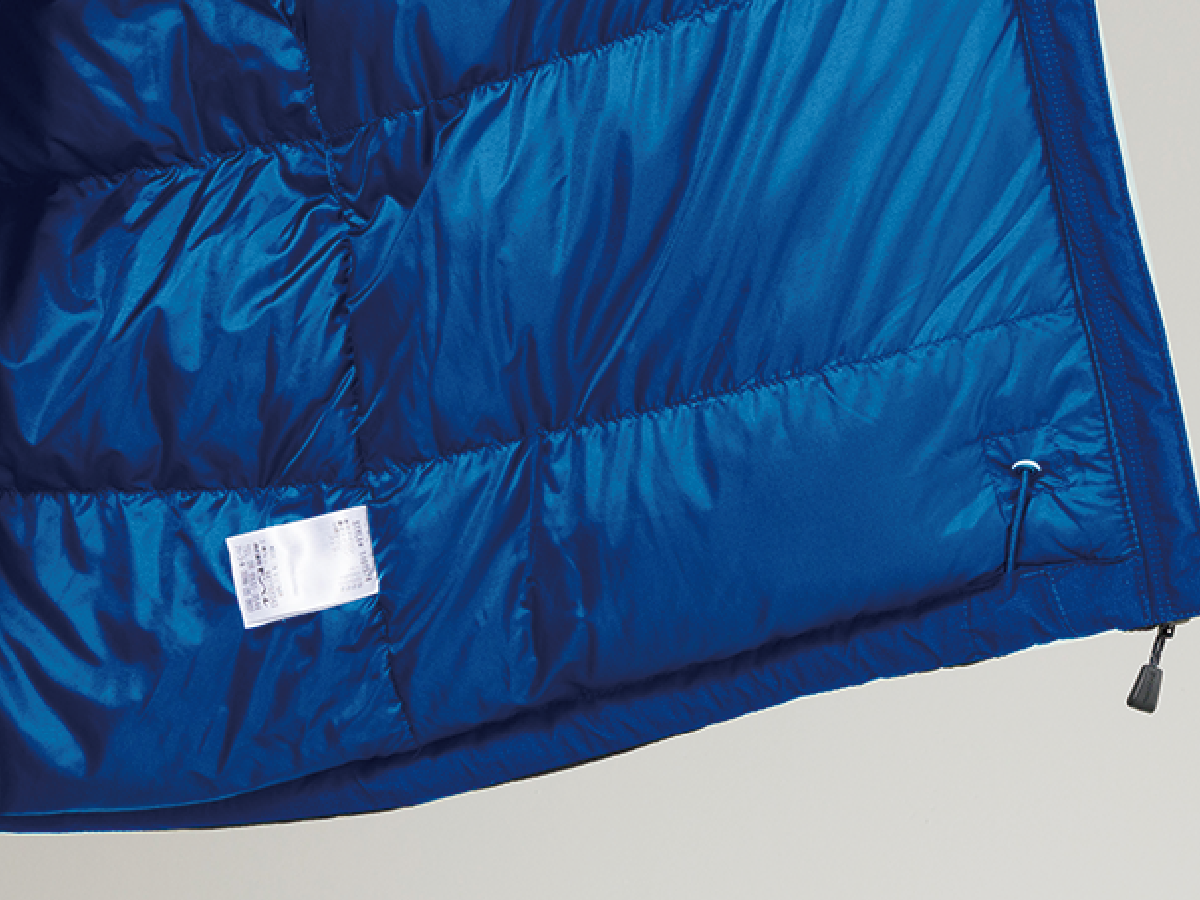
Before washing, make sure to check the garment's care label instructions.
Some garments may say 'dry-clean only' but these garments can be washed by hand (see hand-washing instructions).
2. Spot cleaning
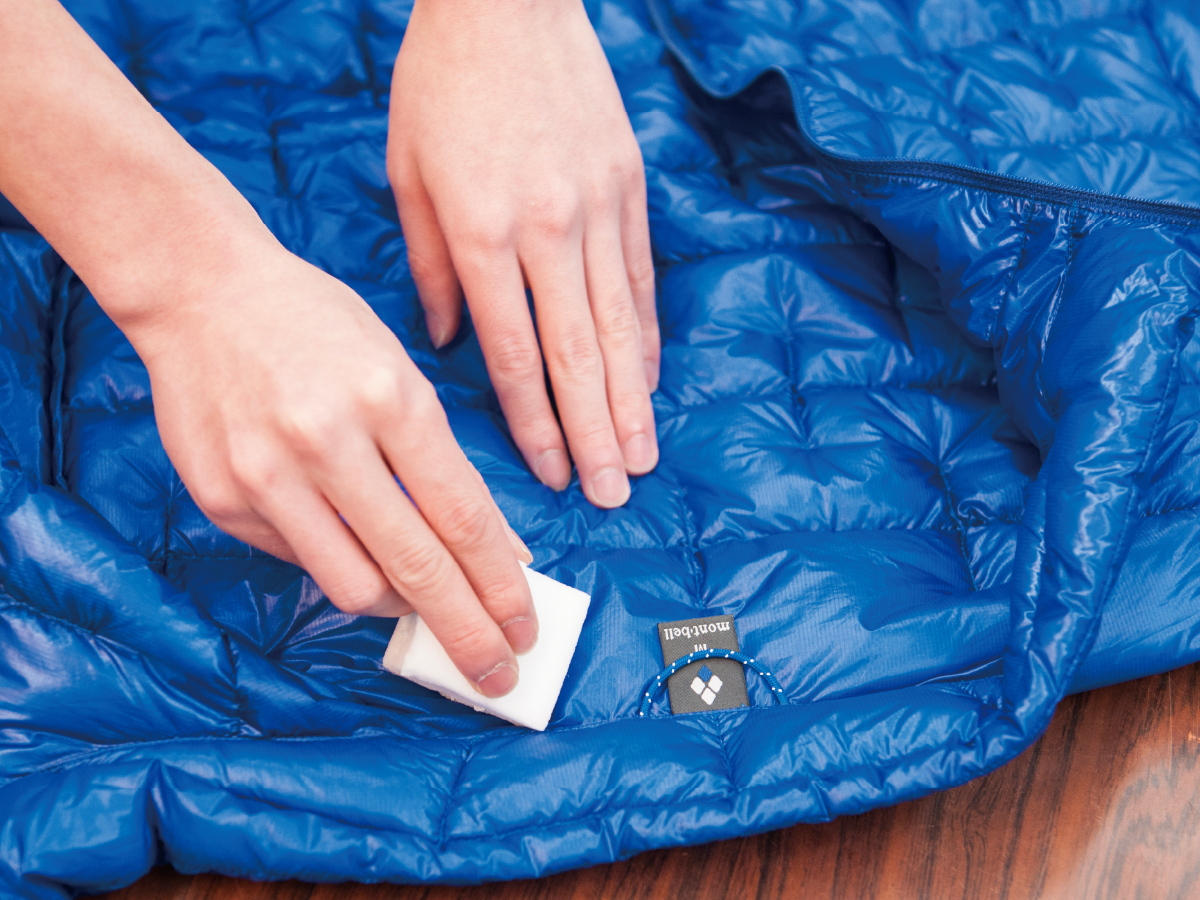
For minor surface stains, spot cleaning is sufficient. It's also effective to spot clean sweat-prone or heavily soiled areas before full washing. Mix down-specific detergent with water and apply using a sponge or towel. For stubborn oil stains, use a towel soaked in degreaser.
- A. Using a washing machine
- B. Hand washing
A. Using a washing machine
3-A. Loading the washing machine
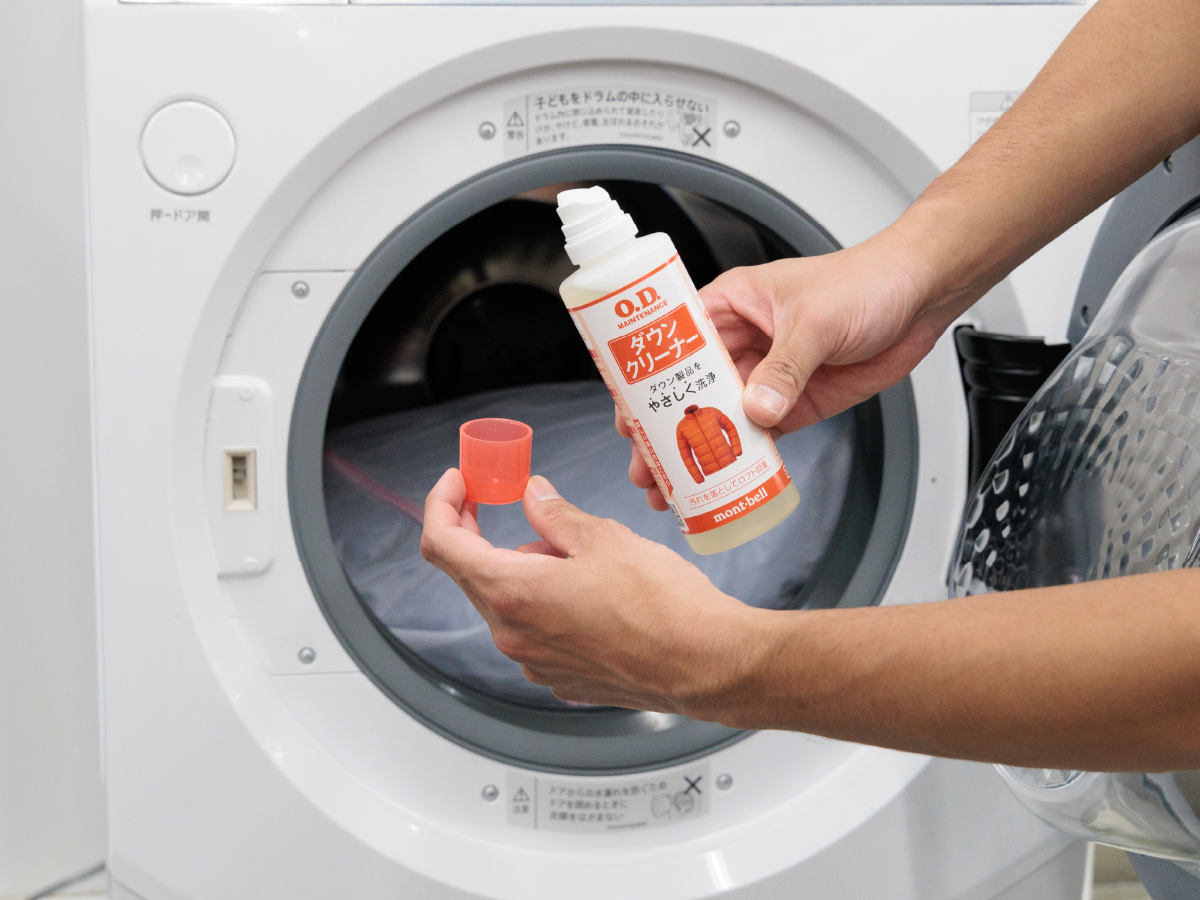
Place the garment loosely into a large laundry net. Add an appropriate amount of down-specific detergent based on the amount of water in the washer. Wash using gentle settings.
For down garments with a waterproof/breathable membrane, such as DRY-TEC or GORE-TEX, turn inside out before placing in the laundry net.
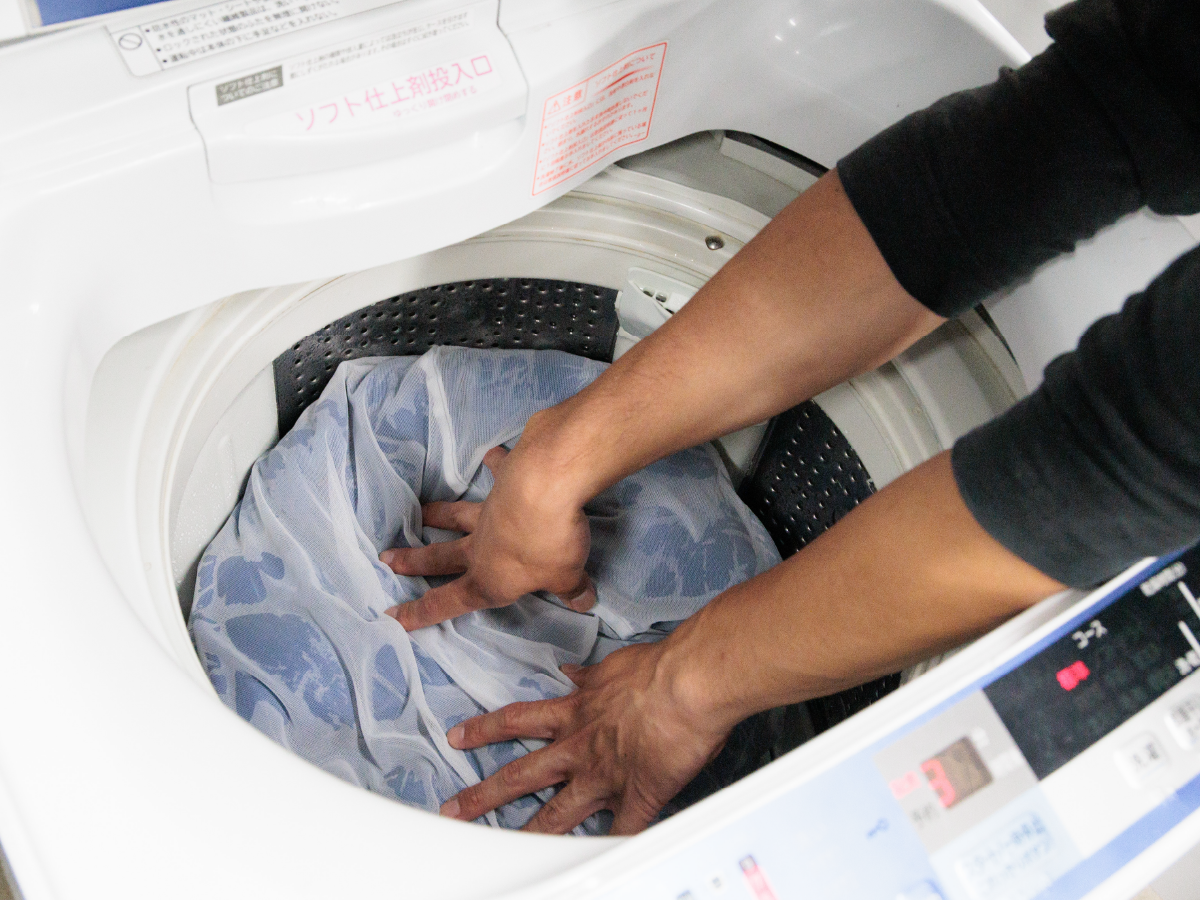
When using top-loading machines, down garments may float and not fully submerge. Open the lid to check, and if needed, squeeze air from the garment by hand to ensure full submersion. We recommend top-loading machines without a center agitator to prevent garment damage.
4-A. Rinsing / 5-A. Spin cycle
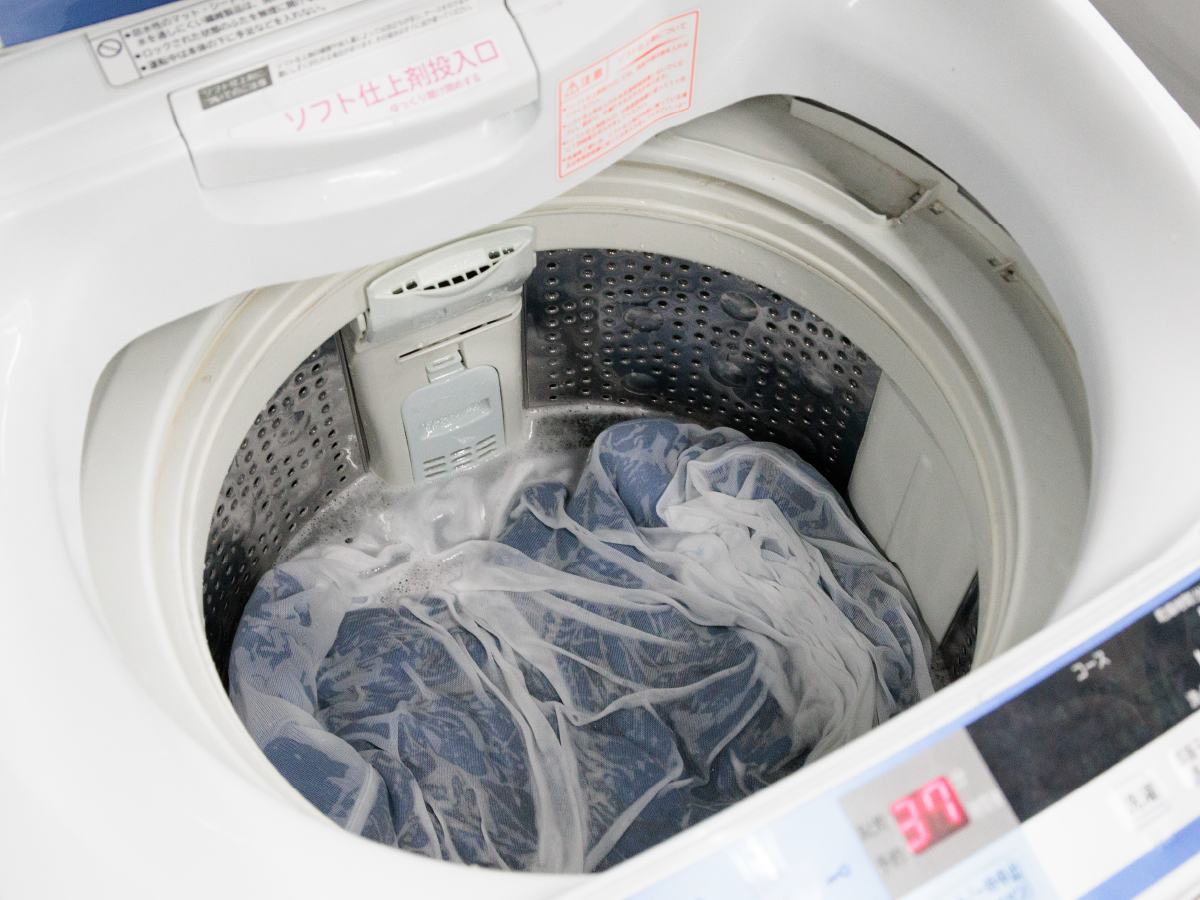
To ensure that no soap residues are left inside or outside the garment, utilize an extra spin cycle.
B. Hand washing
3-B. Washing process
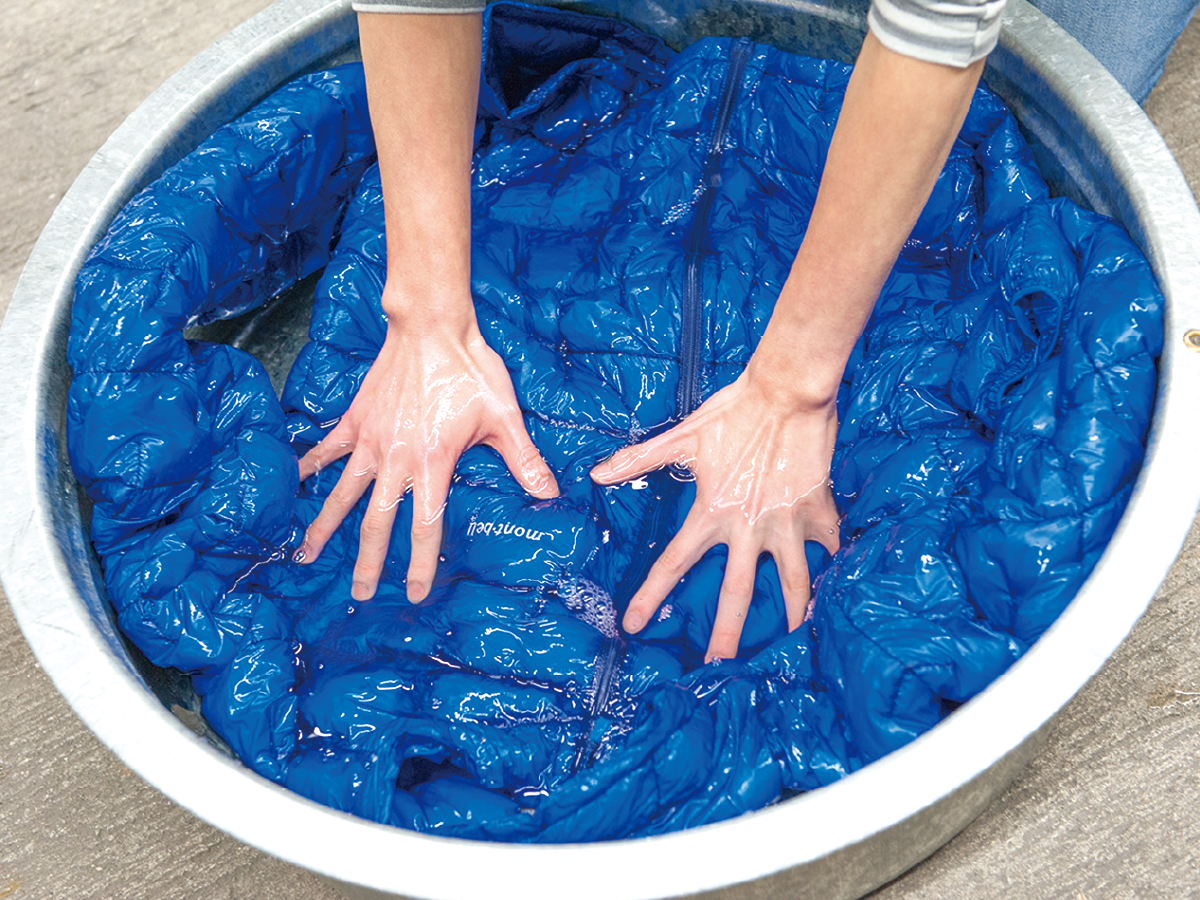
Fill a bathtub or basin with lukewarm water just enough to submerge the garment, and add down-specific detergent. After securely closing all zippers and snap buttons, fold the garment lightly to release trapped air, then immerse it in the solution.
Once fully submerged, perform push-washing. Press down gently and continuously to remove dirt from the fabric and down. The water will gradually become cloudy.
Do NOT lift the waterlogged garment from the basin, as its weight may damage the fabric or seams.
Once fully submerged, perform push-washing. Press down gently and continuously to remove dirt from the fabric and down. The water will gradually become cloudy.
Do NOT lift the waterlogged garment from the basin, as its weight may damage the fabric or seams.
Washing with zippers or snap buttons open may also harm the fabric.
4-B. Rinsing
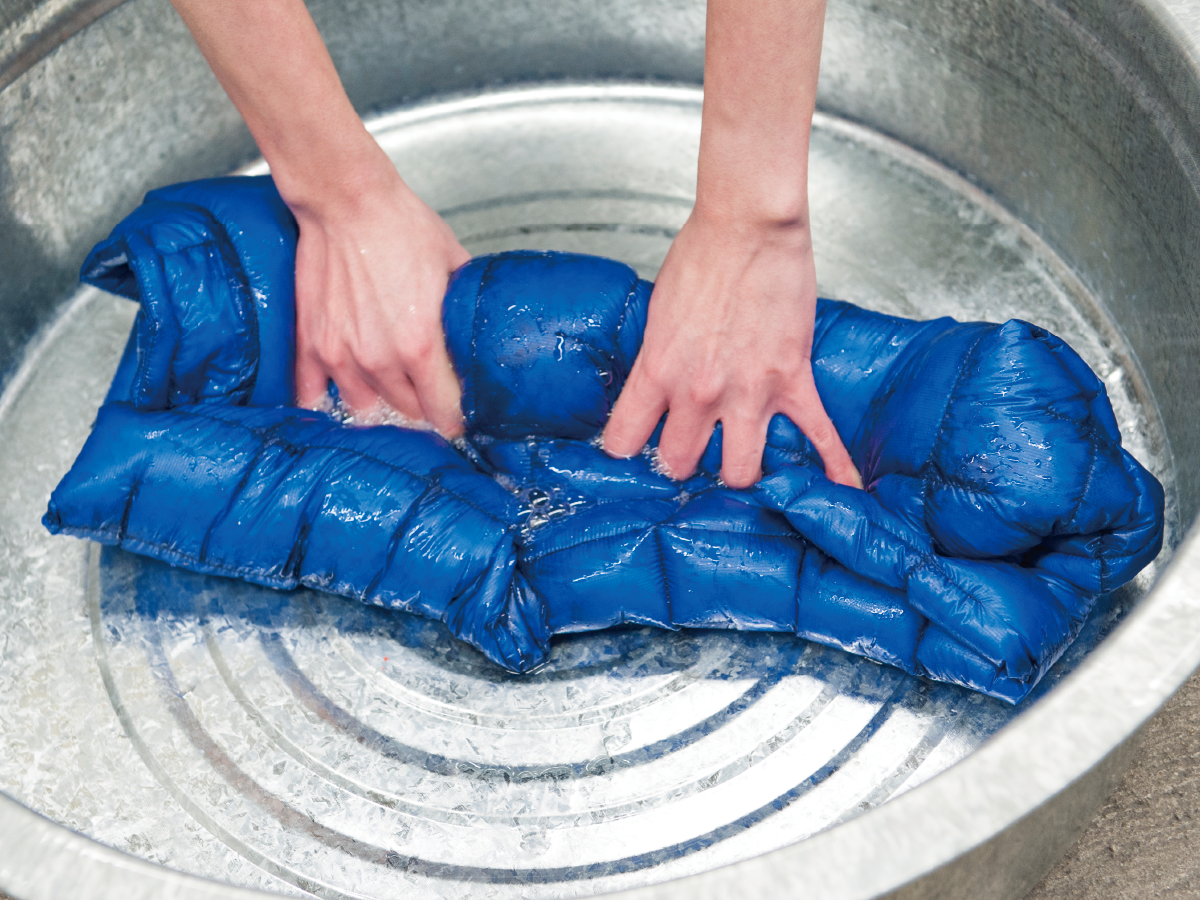
Once push-washing is complete, begin rinsing. Slowly tilt the basin or pull the plug from the bathtub, and wait for water inside the garment to drain naturally. Then, lightly roll up the garment to press out remaining water. Submerge it again in clean water and repeat rinsing thoroughly using the same method until the water runs clear.
Do NOT wring the garment, as this may damage the fabric and down inside.
5-B. Spin cycle
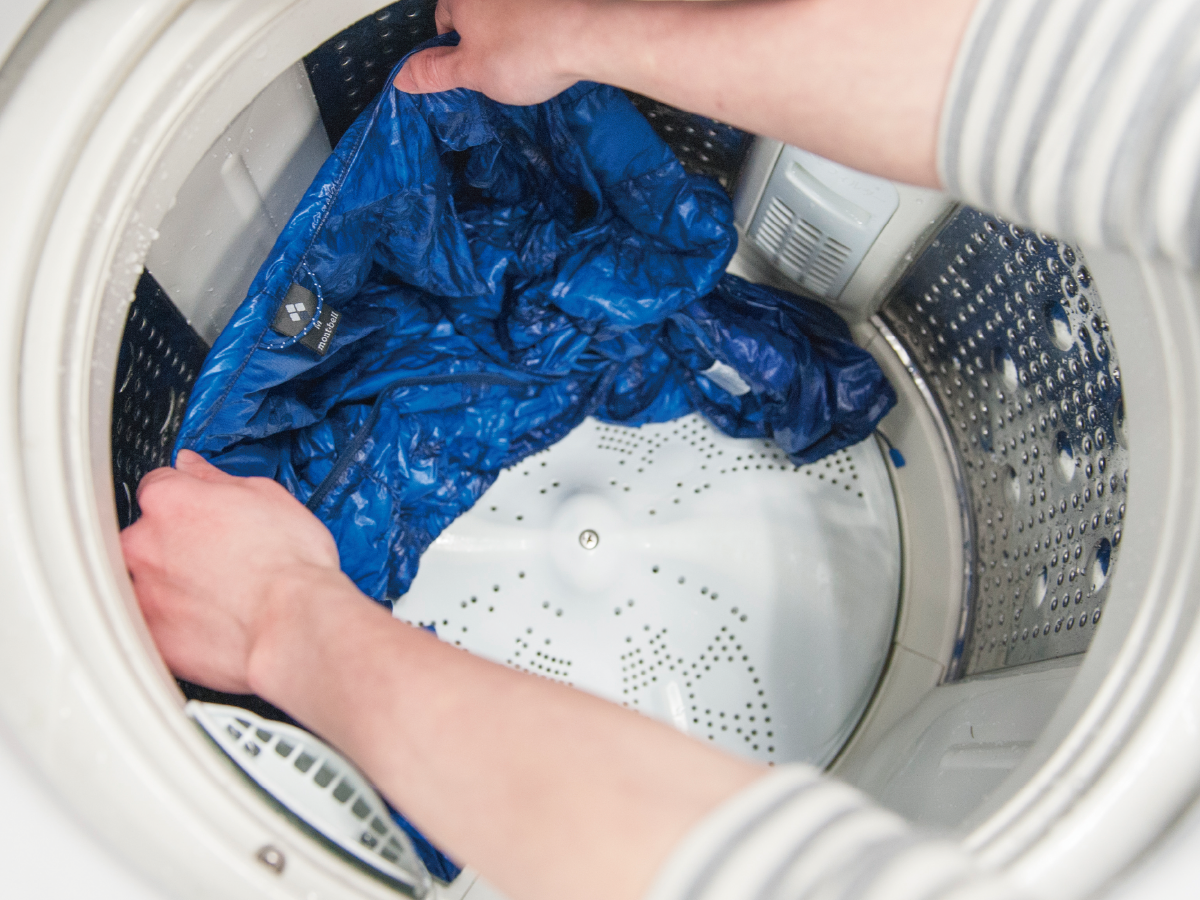
Place the garment evenly against the washing machine drum.
For garments with waterproof/breathable membranes, such as DRY-TEC or GORE-TEX, turn them inside out so the interior faces the drum.
6. Drying
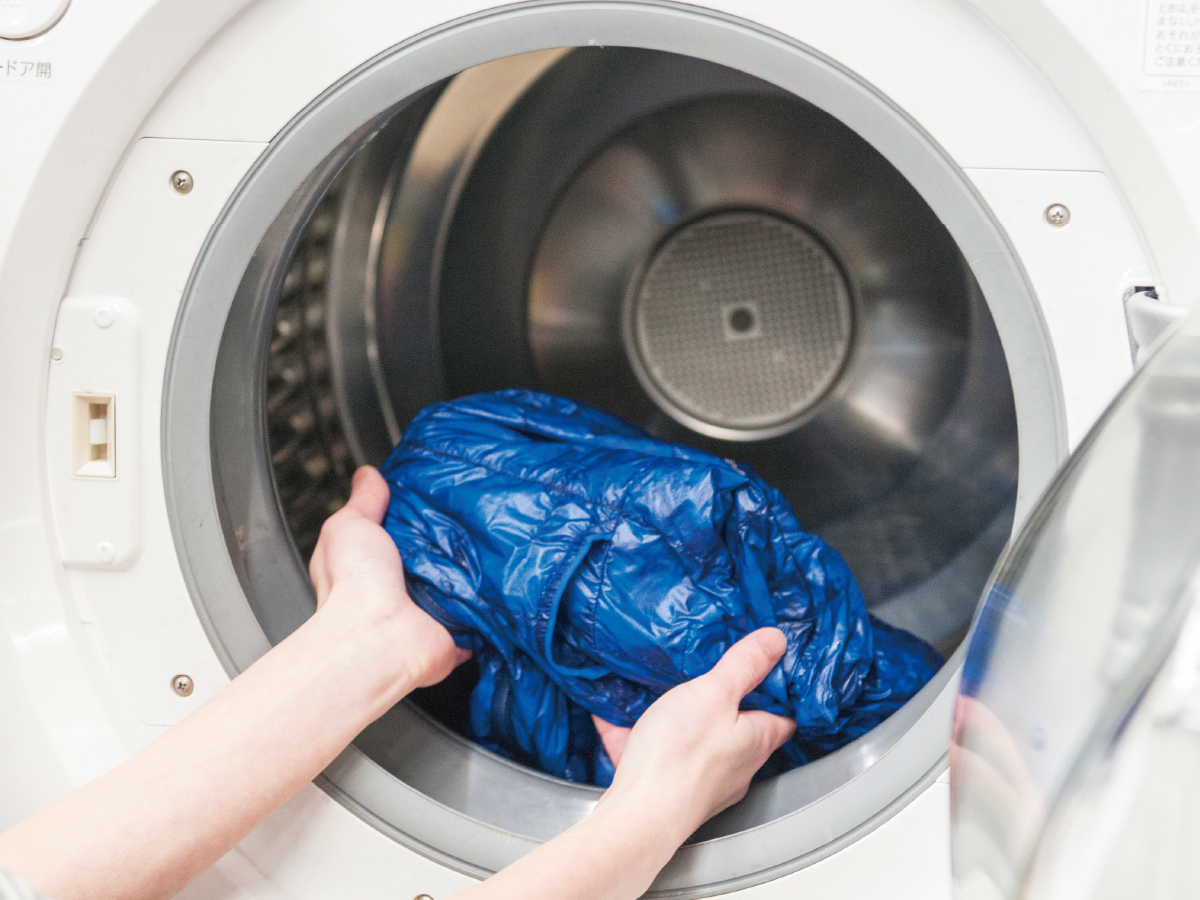
Take the garment out of the laundry net (if machine washed) and place it in the dryer. Use a low-heat setting (60-70 °C). If you don't have a dryer at home, use one at a laundromat. If the down near the collar or zipper is slow to dry, turn the garment inside out to speed drying.
Drying time varies by dryer and down fill amount. Check periodically and lightly tap with both hands to loosen down and prevent clumping.
Even if the exterior feels dry, moisture may remain inside. Finish by hang-drying in a shaded, well-ventilated area for about one week. Once fully dry, gently pat the entire garment to break up any down clumps.
Garments with waterproof/breathable membranes, such as DRY-TEC or GORE-TEX, or natural materials, such as FLARTECT, may take longer to dry. During drying, periodically flip the garment inside out and back to promote even drying.
Drying time varies by dryer and down fill amount. Check periodically and lightly tap with both hands to loosen down and prevent clumping.
Even if the exterior feels dry, moisture may remain inside. Finish by hang-drying in a shaded, well-ventilated area for about one week. Once fully dry, gently pat the entire garment to break up any down clumps.
Always dry in the shade to protect the fabric from UV damage.
Water repellent treatment
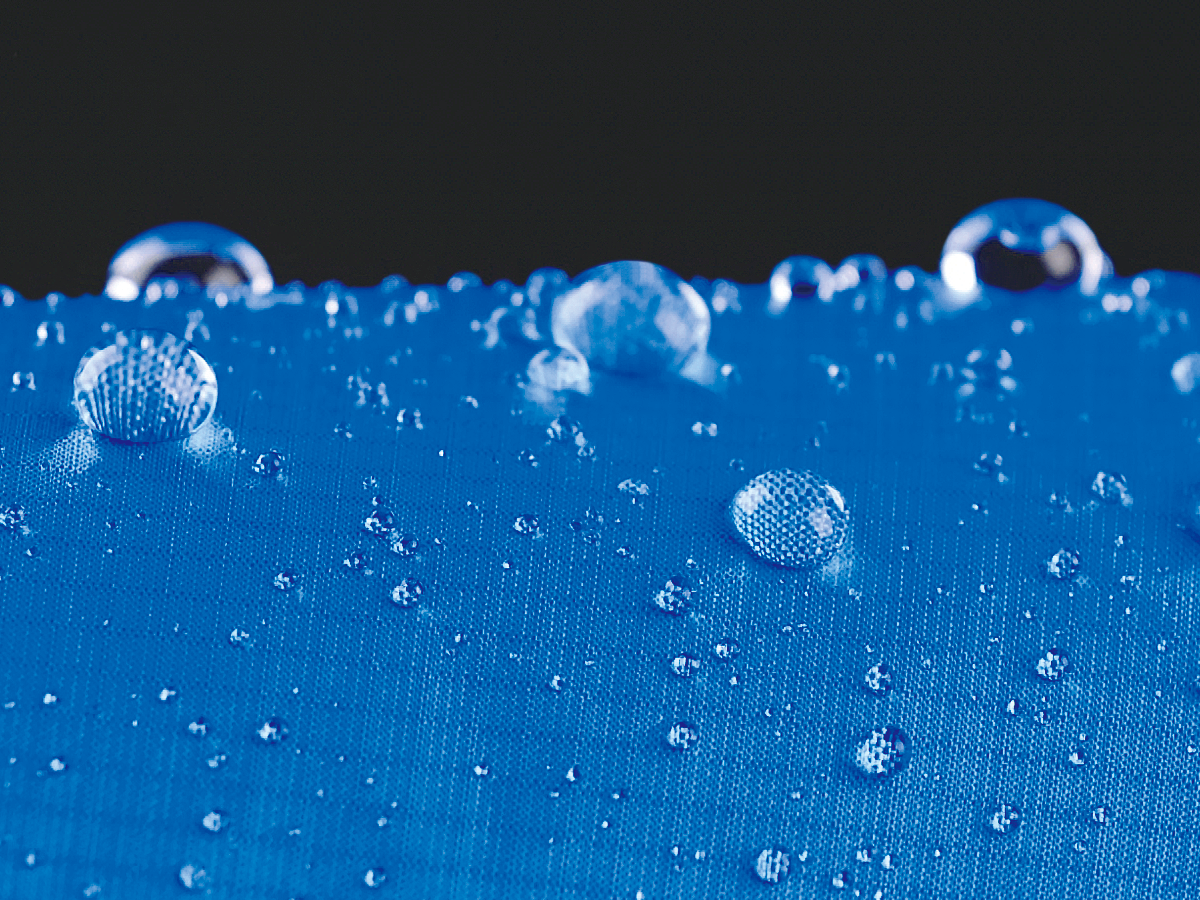
Montbell's down garments use fabrics treated with a water repellent. This creates a water-beading effect that prevents down from getting wet and losing loft (fluffiness), while also repelling dirt and contaminants.
Through normal use, such as friction or washing, the water-repellent treatment will eventually wear off. We recommend reapplying to restore the water-beading effect, especially if it's absent after washing.
Through normal use, such as friction or washing, the water-repellent treatment will eventually wear off. We recommend reapplying to restore the water-beading effect, especially if it's absent after washing.
Montbell's water repellent agent is a PFAS-free, environmentally friendly product.
Liquid Spray Type
This spray-type water repellent easily provides powerful water-repellent treatment. Apply after washing, before tumble drying.
Aerosol Spray Type
Simply spray to quickly activate water repellency. After drying, spray evenly over the garment and air dry in a well-ventilated area for about 1 day.
Storage
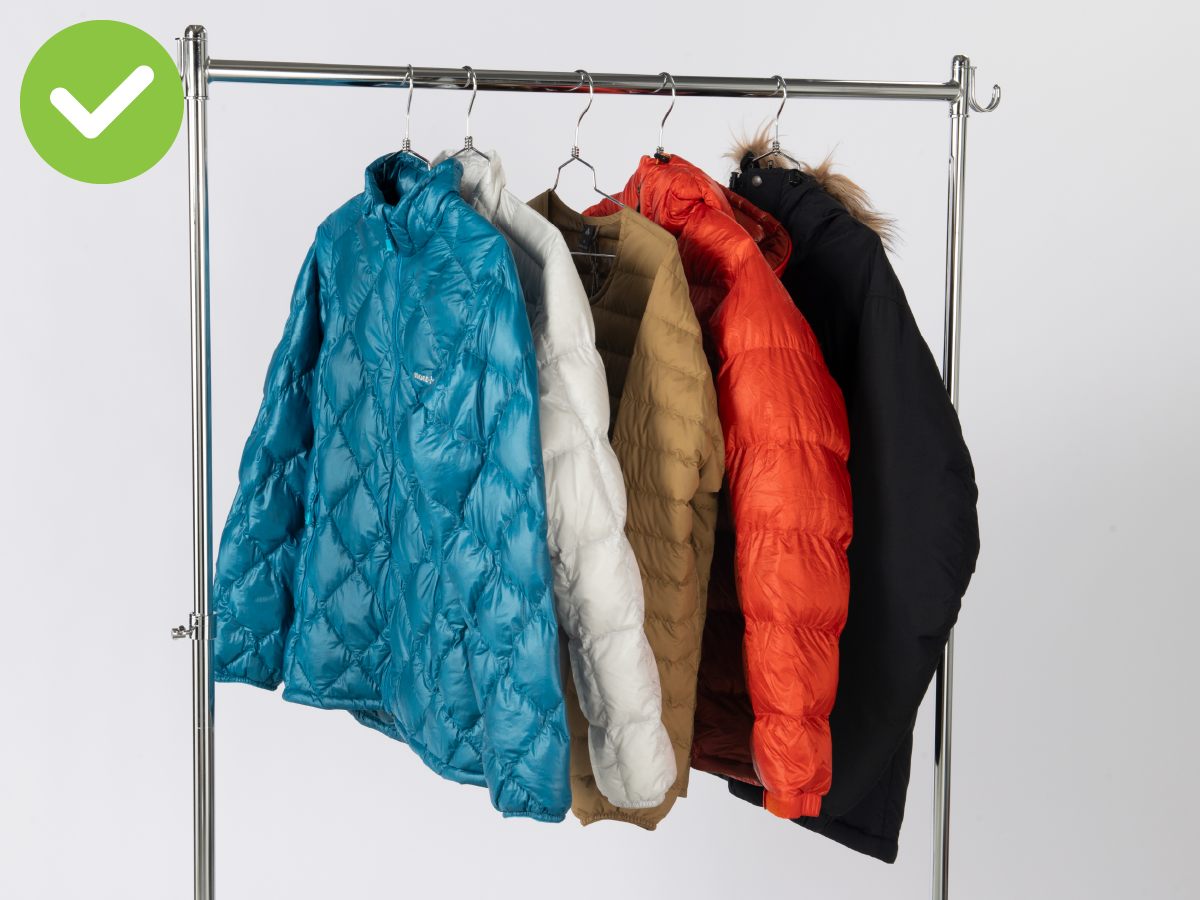
Hang on a hanger or store loosely in a large, breathable bag. Moisture causes mold, so store in a well-ventilated area. If using a closet, periodically air it out or use a dehumidifier.
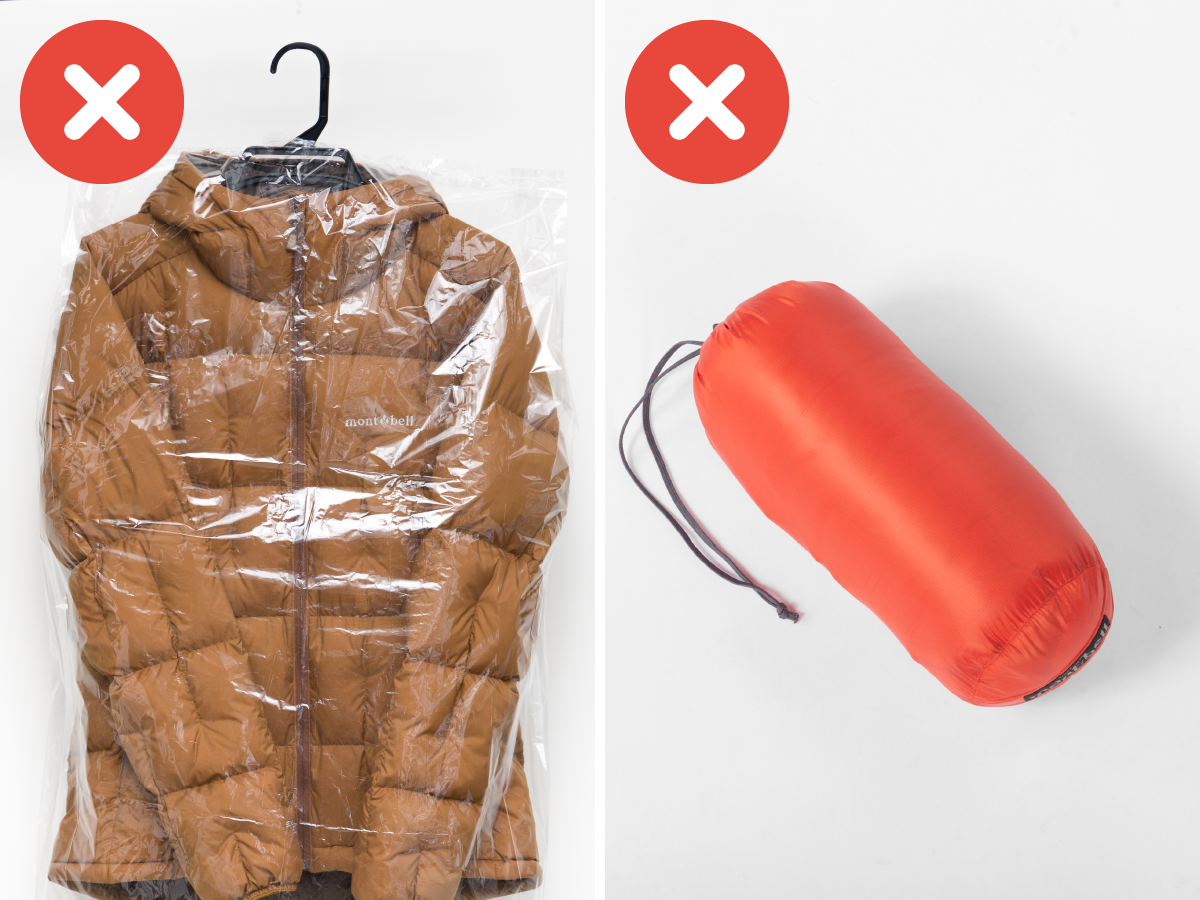
Avoid plastic or vinyl bags for storage. After dry cleaning, remove any plastic covering to prevent discoloration.
Stuff bags are for compact transport, not for long-term storage.
Storage Bags
Long-term storage bags prevent loft (fill power) loss in insulated products. Available in breathable mesh and dust-resistant taffeta types.
Down feathers coming out
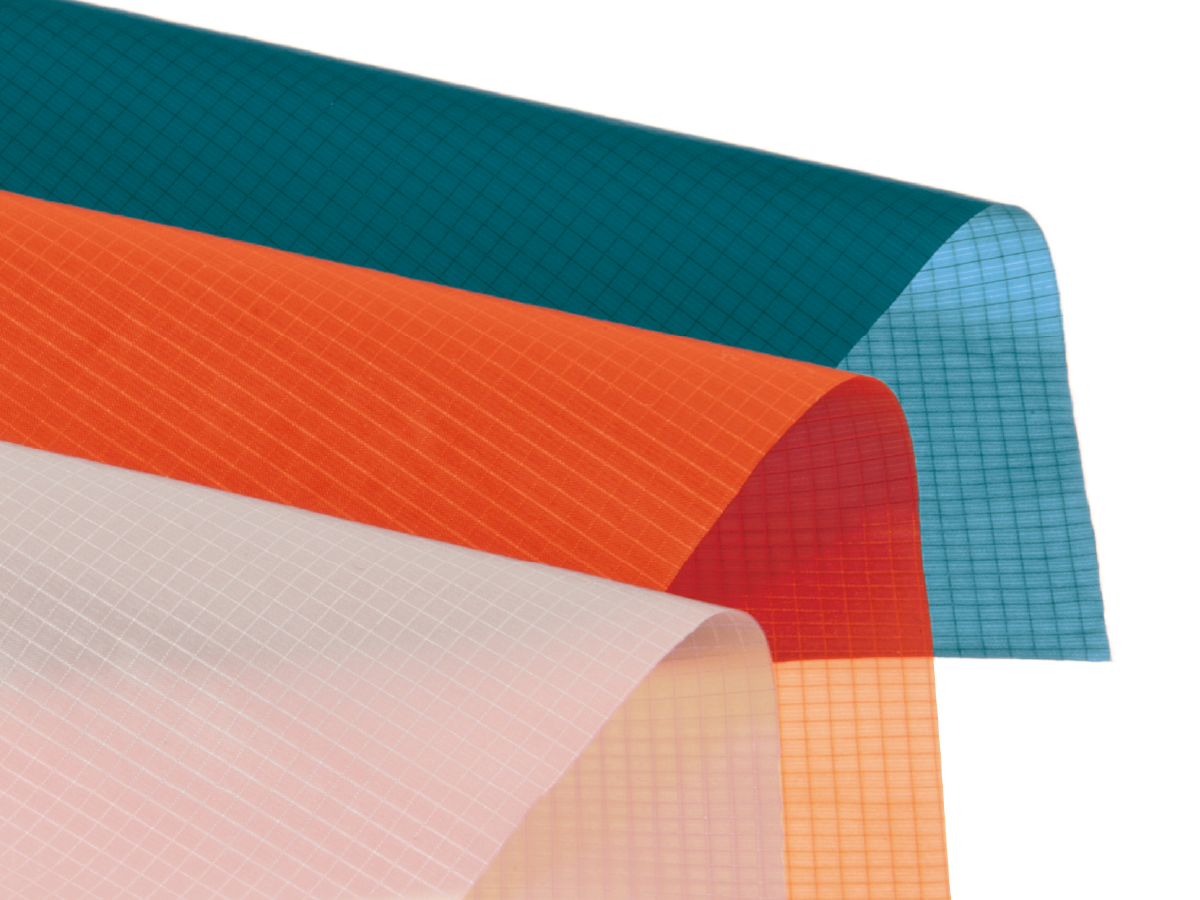
Although the fabric is downproofed to prevent down and small feathers from escaping through the weave, a small amount may occasionally emerge. This is a negligible fraction of the total fill and won't affect insulation or loft (fill power). However, avoid pulling out protruding down, as it can cause the entwined down to come out one after another. Here's how to handle it.
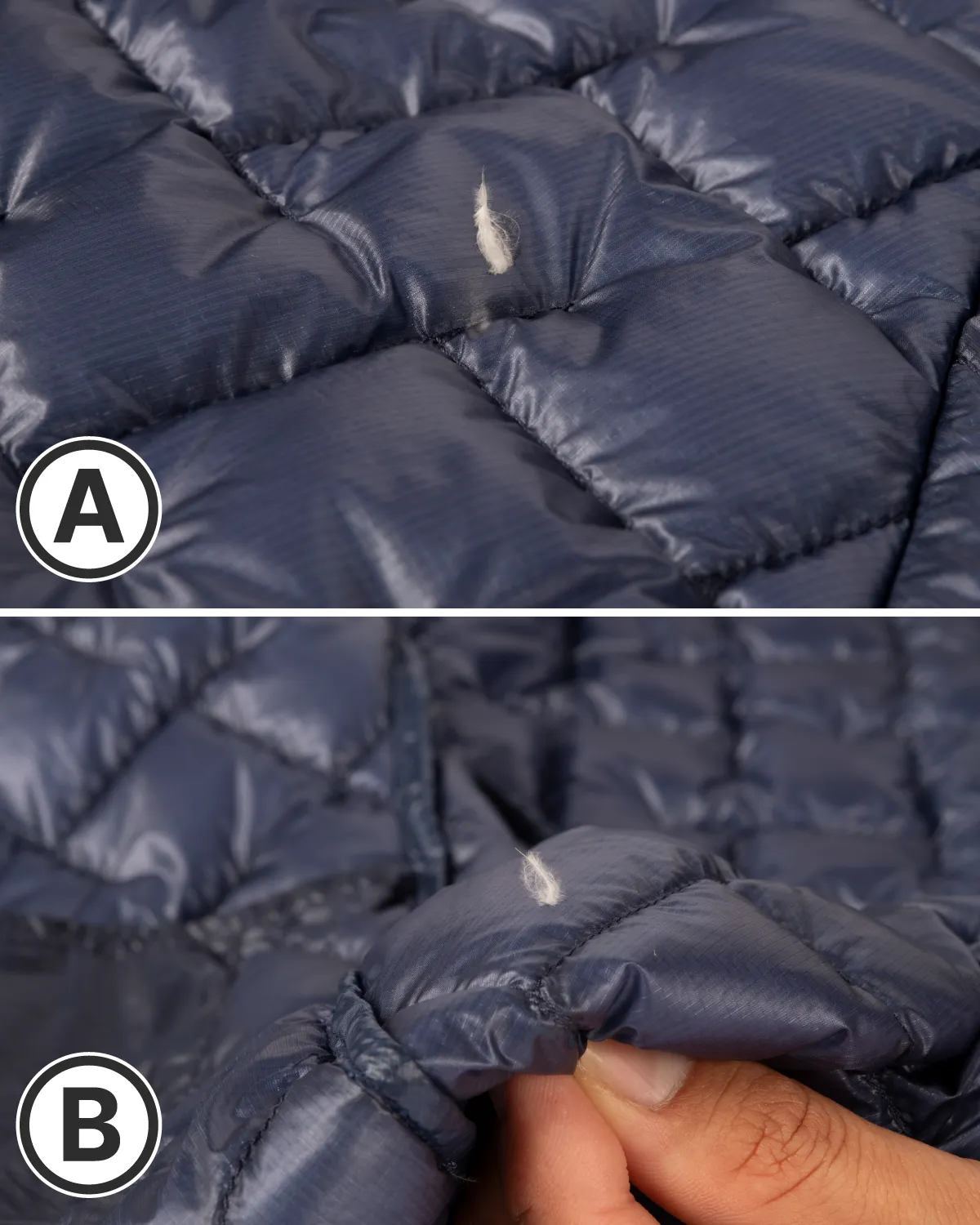
Two types of down leakage:
- From seams - These are fragments of cut feather or down. Remove with adhesive tape or similar by pressing and peeling.
- From fabric - Feathers protruding from the surface (Photo A) can attract others via static if pulled. Instead, pinch from the inside (Photo B) and tuck back in. Gently rub the spot to smooth out and reseal the fabric.
Tips for long-term use in comfort
When down shifts
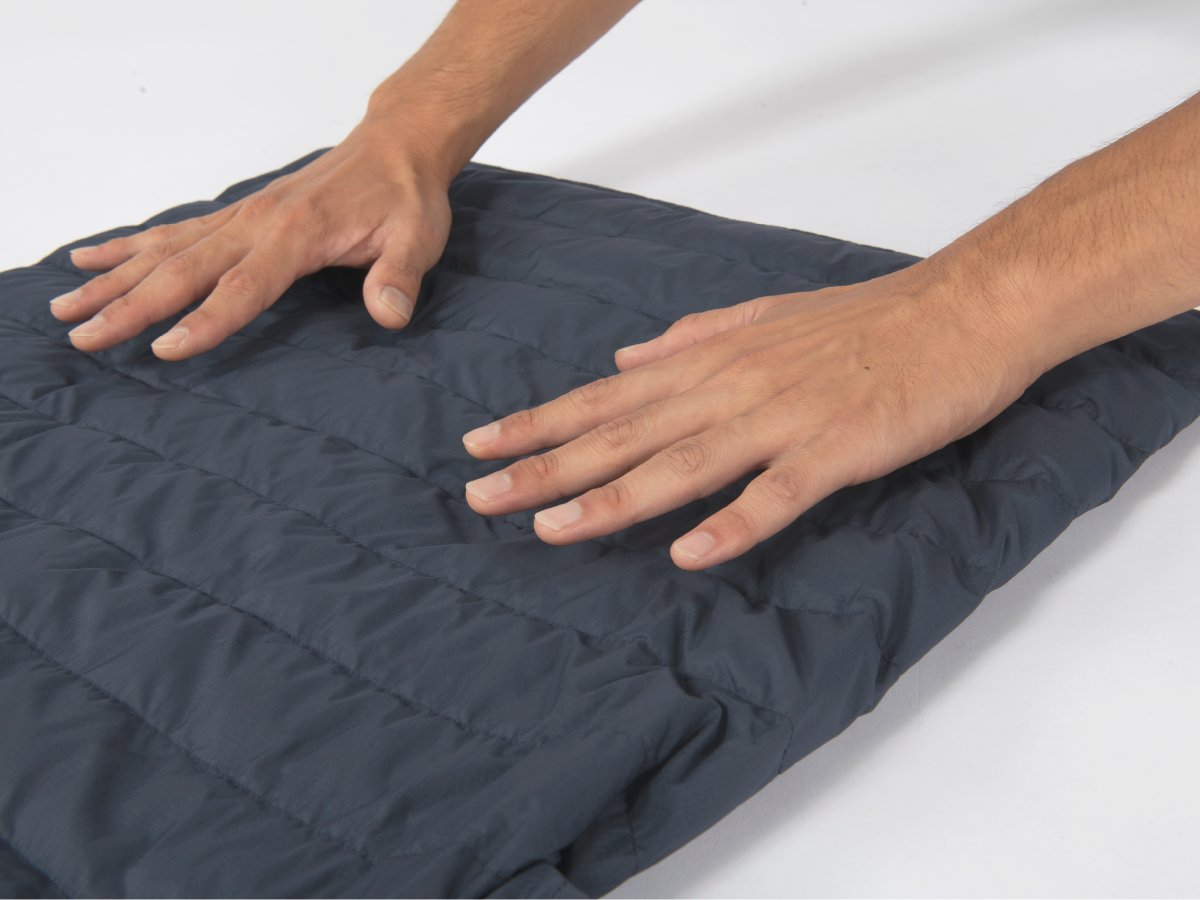
Prolonged sitting can cause the down in the back to be pushed toward the sides. If this happens, lay the garment flat and gently tap it to redistribute the down.
When wet from rain
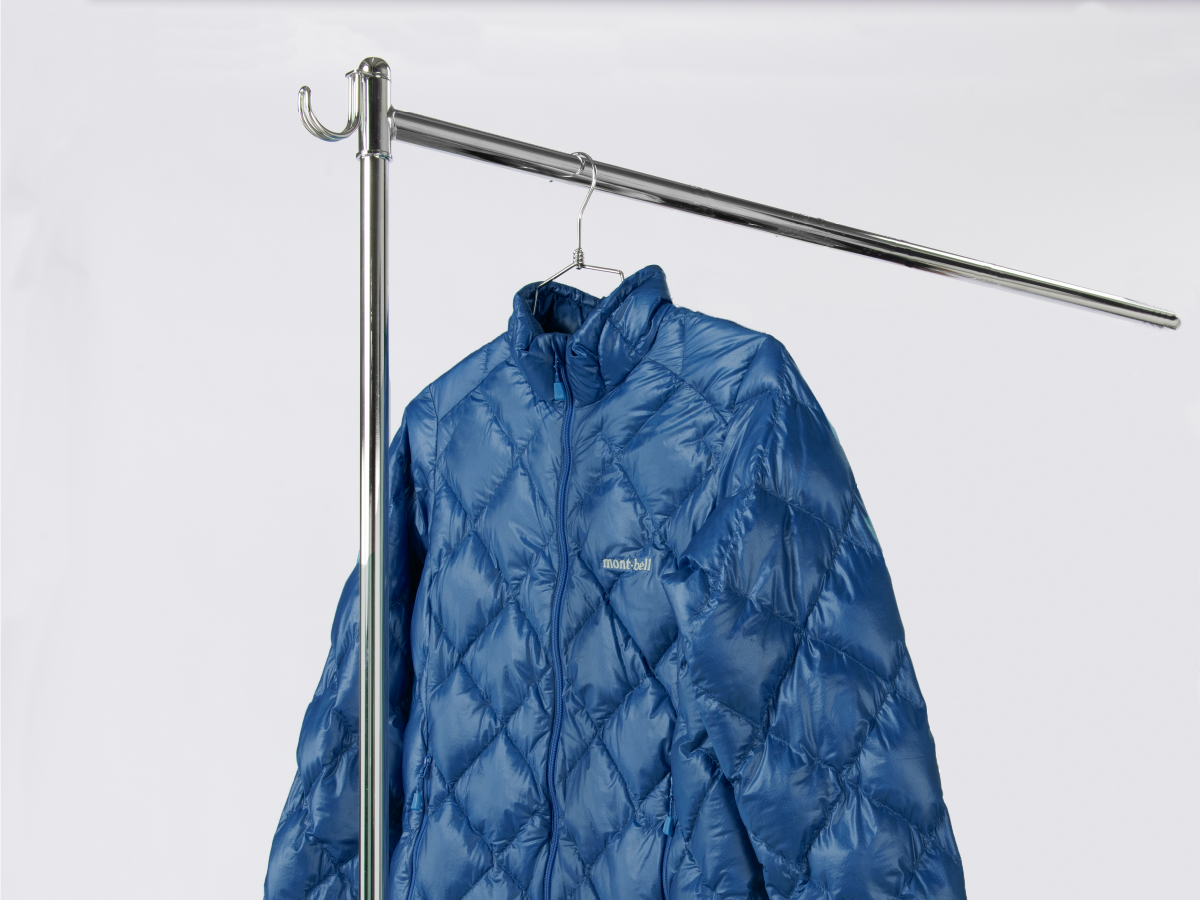
If the garment becomes slightly wet from rain, wipe off the moisture with a towel and air dry it in the shade. If heavily soaked, wash it before drying, as damp down can cause odors.
How to pack into the stuff sack
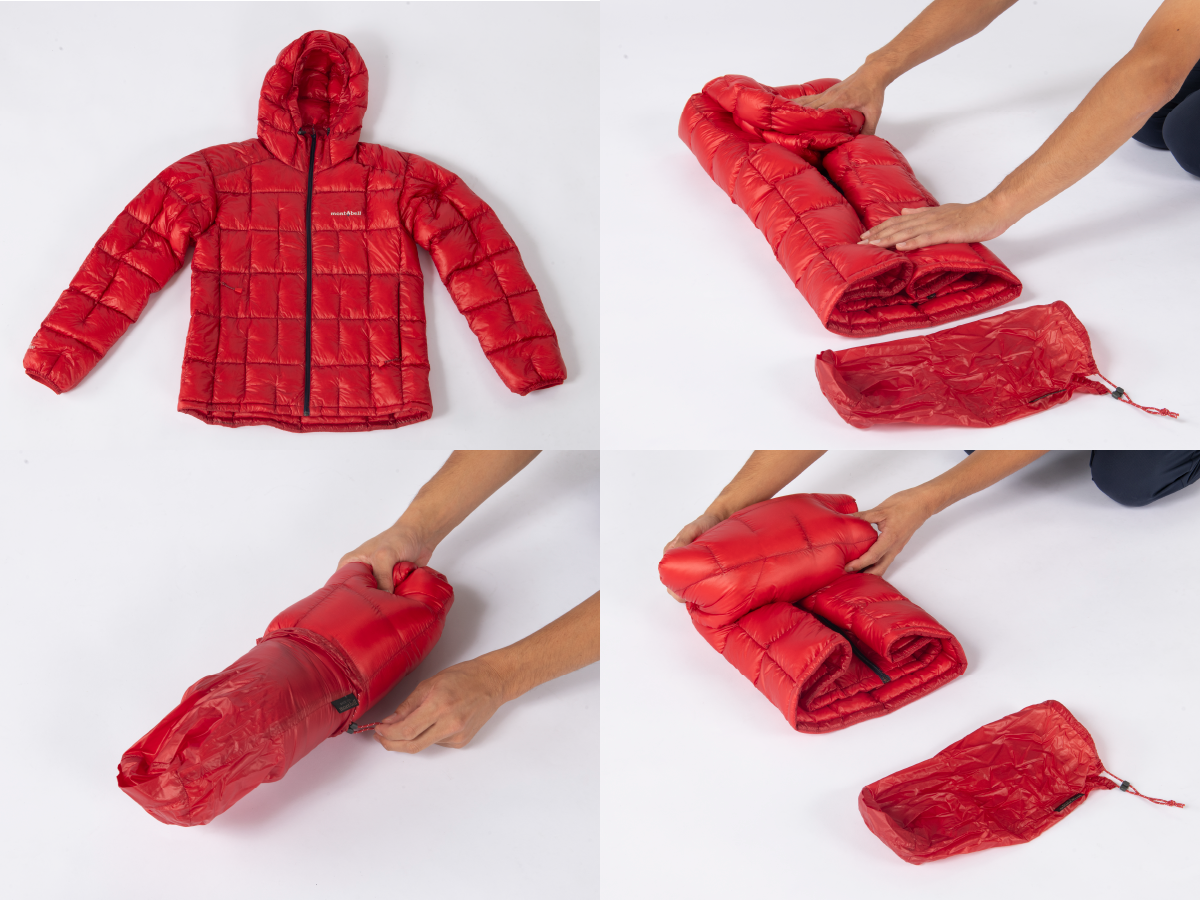
To prevent damage from zippers or snap buttons, be sure to fold the garment before packing. Fold it to match the width of the stuff sack, then roll it from the collar and place it inside. This helps reduce pressure on the fabric caused by zippers.
When the zipper doesn't slide smoothly
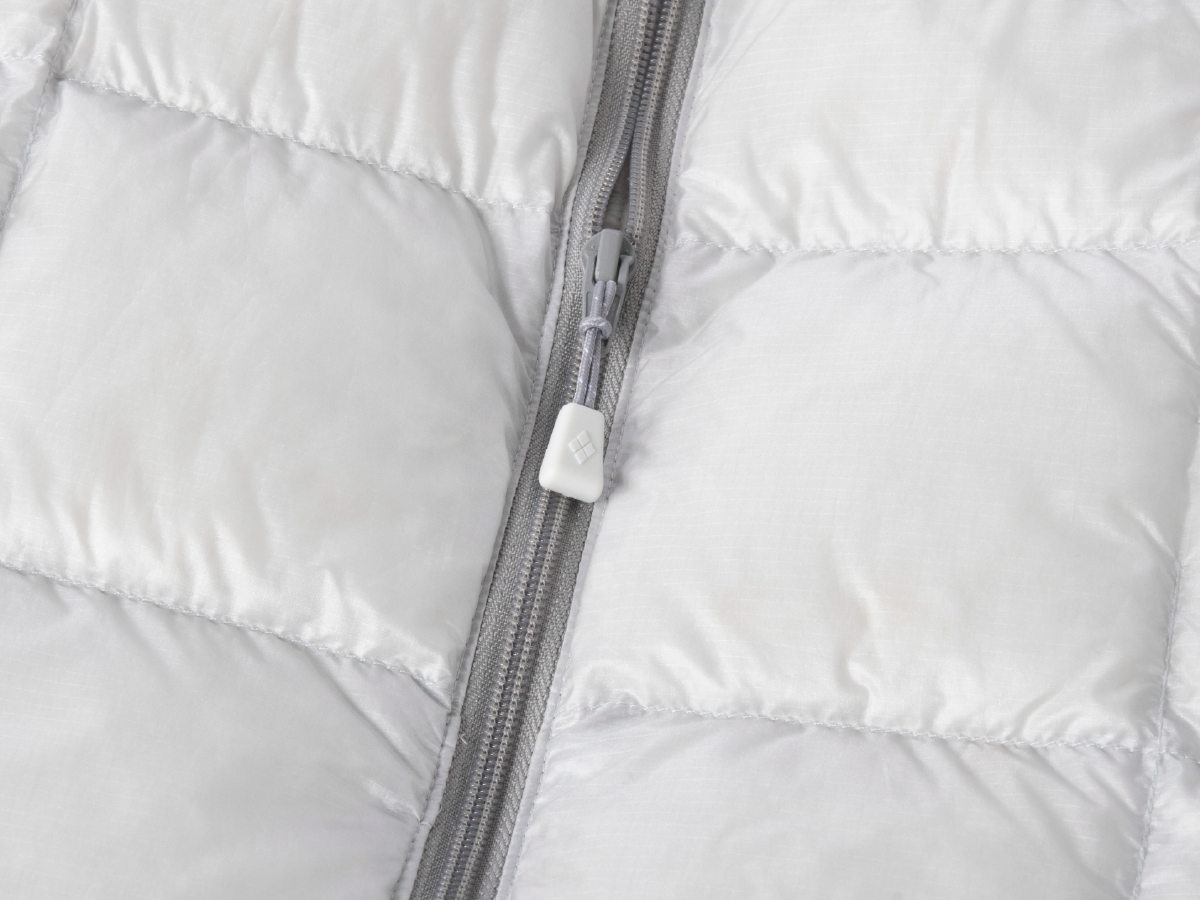
First, wash the garment to remove any debris, such as sand, from the zipper. Using a lubricant such as Smooth Slider can also help it move more smoothly. This is particularly effective for Aqua-Tect zippers.
If the zipper is deformed or damaged, do not try to force the slider, as this may worsen the condition. We recommend using .
Repairing minor tears
Small tears in the fabric can be temporarily repaired using repair patches.
Note that patches may peel off during washing, depending on the fabric. Do not use a dryer or iron to apply heat to the patches, as the adhesive may cause staining.
For repairs, we recommend using .
Preventing fabric stains
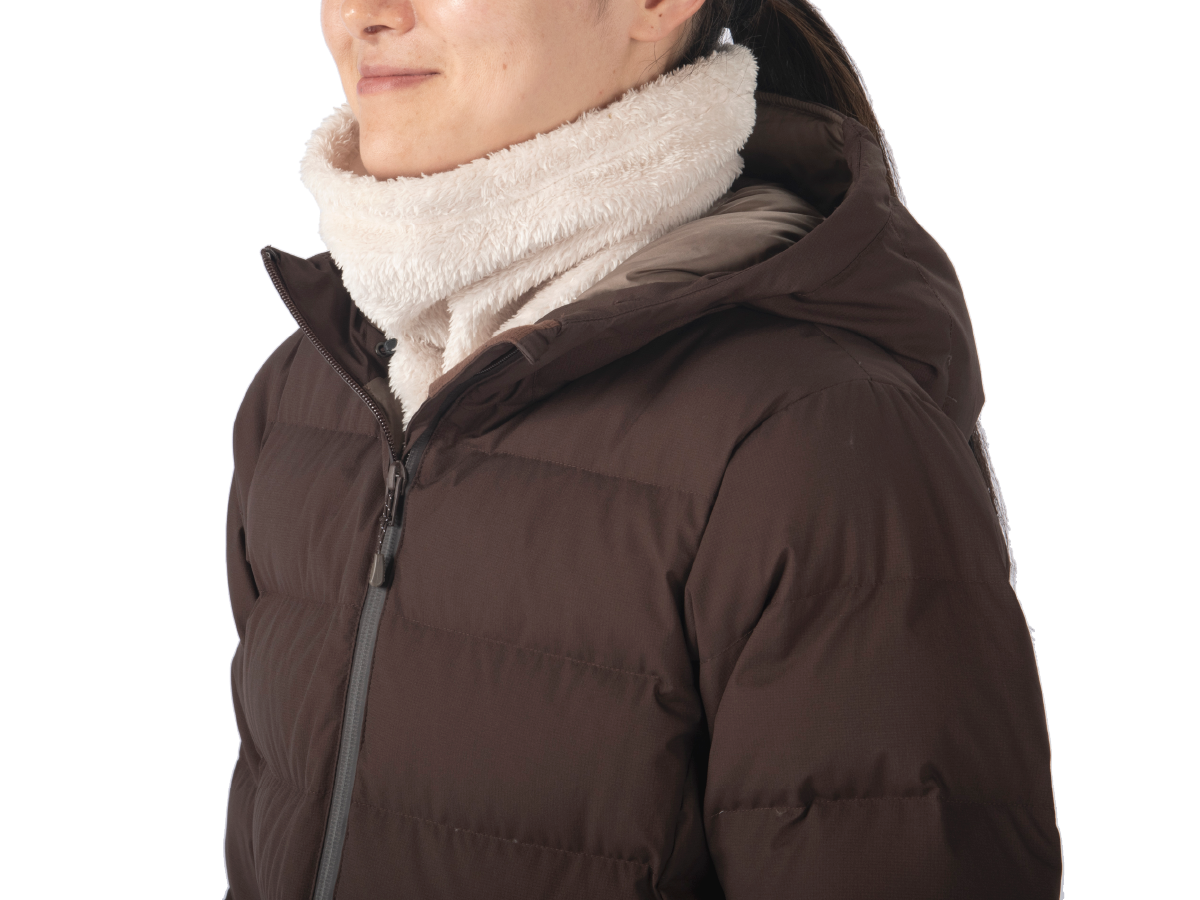
The accumulation of sweat and oils on insulated garments reduces loft, decreasing thermal performance. We recommend wearing a scarf, neck gaiter, or gloves to minimize direct skin contact with the fabric. This helps reduce the risk of stains on the collar and cuffs, which are particularly prone to soiling.


